
Research background
Research background
Faience has been the focus of research in early vitreous materials for almost 40 years. It is archaeologically both abundant and important, being the earliest and longest-made vitreous material on record. The first faience artefacts occur in the Aegean towards the end of the 3rd or the beginning of the 2nd millennium BC, but it is not until the 2nd millennium BC that its production reaches unprecedented highs and is firmly established. Faience -along with Egyptian blue frit- is the first vitreous material retrieved in the Aegean, holding an abundant and ubiquitous presence in burial and settlement contexts during the Late Bronze Age. When glass appeared in the Aegean, it constituted undoubtedly an integral element of the Mycenaean material culture, a fact also attested in its ubiquity in archaeological contexts. Consequential achievements of this technology, clearly adopted as a cutting-edge one, are pronounced in the archaeological record in the 16th cent. BC onwards, with glass reaching prominence at the time of the rise of the palaces. Research over the last decades has greatly enhanced our understanding of the production and distribution of glass and faience across time and space, resulting in a complex, yet fascinating picture of the socio-economic and cultural aspects underlying vitreous production.
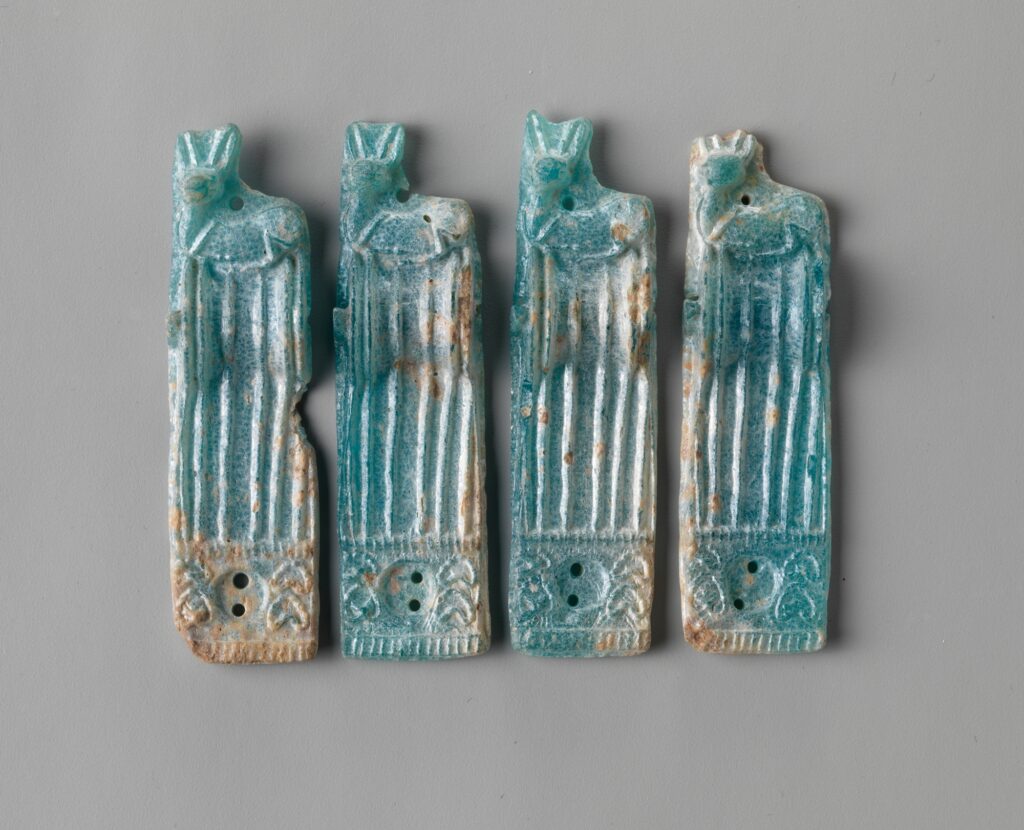
While undoubtedly there is room for more analytical research, the years of studying vitreous materials have highlighted a major setback in research. Both materials do suffer a great degree of degradation, with the smaller objects, such as beads and relief plaques, which constitute the largest set of artefacts retrieved, being particularly vulnerable. The degree, extent and nature of this degradation -critically distorting the visual characteristics of the artefacts- affect the way in which the material can be studied and interpreted by archaeologists, conservation scientists and archaeometrists. Glass may exhibit iridescence, lamination, a chalk-like texture or incarnation, pitting and/or micro-pitting, cavities and hollows, encrustations and black spots, total loss of initial color, loss of transparency, with faience exhibiting similar degradation characteristics comprising total loss of the glaze and initial color.
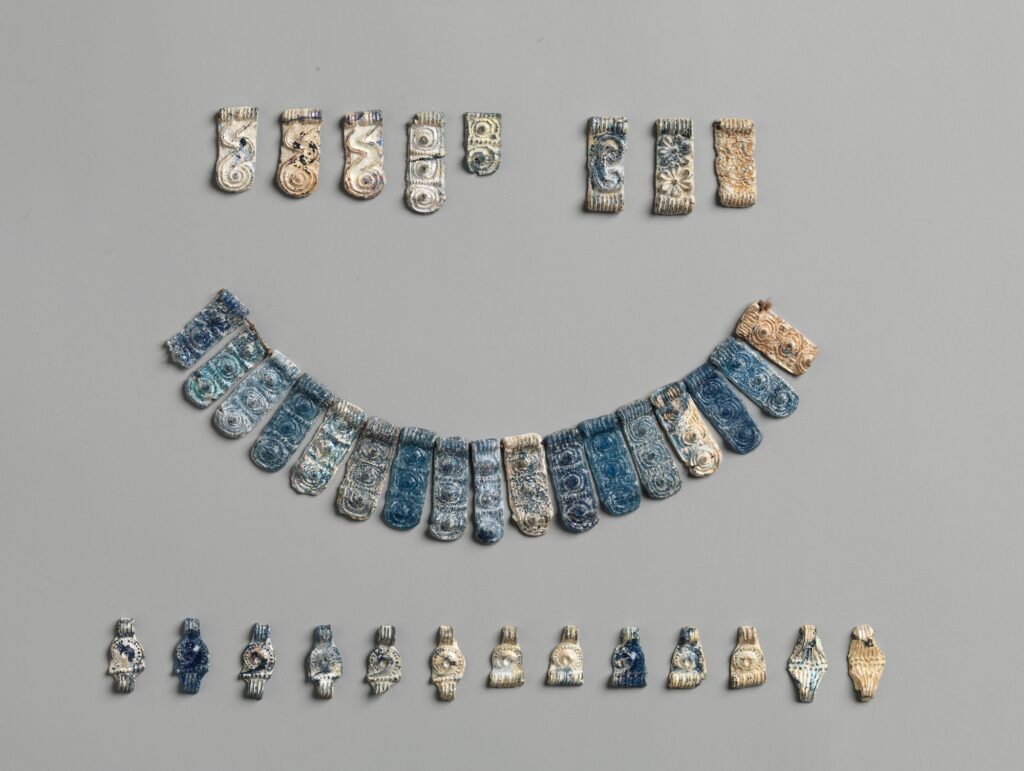
Practically, the final corrosion state of the artifact imposes constraints on its taxonomy, since it has lost the glassy state/glaze and with degradation yielding similar optical effects telling glass apart from faience can prove challenging. Alongside, the degree to which visual and compositional analysis can be applied, and the choice of conservation methods used to stabilize and conserve artefacts after recovery.
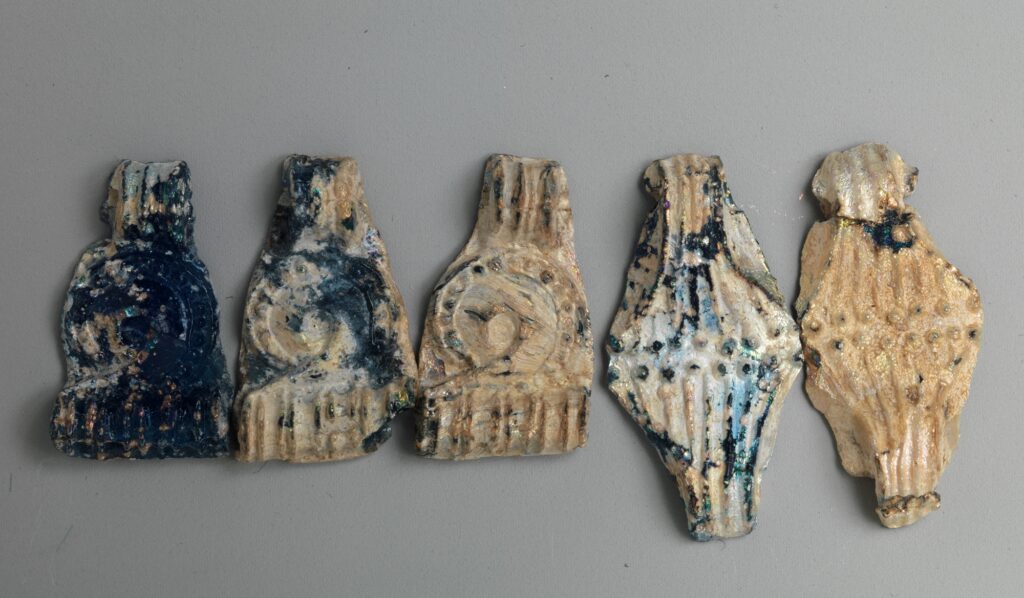
Thus, resolving taxonomy issues is a challenging task not only because of the complex degradation mechanisms which have a direct impact on the visual appearance of the materials and their compositional fingerprint; but also because their physical damage and alterations have led to their frequent misclassification upon retrieval and final storage resulting in further damage, due to mismanagement and, importantly, misleading notions in the archaeological record.
Hence, a fully documented inter-disciplinary study with the aid of state-of-the-art analysis is deemed urgent, in order to accurately document and visualize the nature of degraded materials, offering the scientific community a valuable tool towards safe attribution of Mycenaean vitreous materials, both upon unearthing, storing and preserving and upon interpreting, reconstructing and researching.